
Laparoscopic Surgical Procedures
Laparoscopic Surgery (also known as Minimal Invasive Surgery or Keyhole Surgery) utilizes small incisions (0.5–1.5 cm) through which a specialized camera (laparoscope) and high-precision tools are inserted. This advanced approach dramatically reduces patient trauma, minimizes post operative pain, limits scarring, and significantly accelerates recovery times compared to traditional open surgeries.
GENERAL SURGERY PROCEDURES
Laparoscopic Appendicectomy
This is the urgent or planned surgical removal of the appendix, a small pouch-like structure connected to the large intestine. When the appendix becomes obstructed and inflamed (Appendicitis), it presents as severe, radiating abdominal pain. If left untreated, it risks rupture, leading to life-threatening peritonitis. The laparoscopic method safely detaches, ligates, and extracts the infected organ through
minimal incisions.
Laparoscopic Cholecystectomy
Our advanced laser technology allows us to provide safe and effThis routine procedure involves the comprehensive removal of the gallbladder, a small fluid-filled sac under the liver responsible for storing bile. It is highly recommended for patients experiencing chronic gallstones (Cholelithiasis) or acute gallbladder inflammation (Cholecystitis), which cause agonizing upper abdominal pain and digestive complications. Once removed, bile flows directly from the liver into the small intestine, preserving standard digestive capabilitiesective hair removal treatments on various areas of the body. Say goodbye to unwanted hair with long-lasting results.
Laparoscopic Hernia Repair
TECHNIQUES: TAPP / IPOM
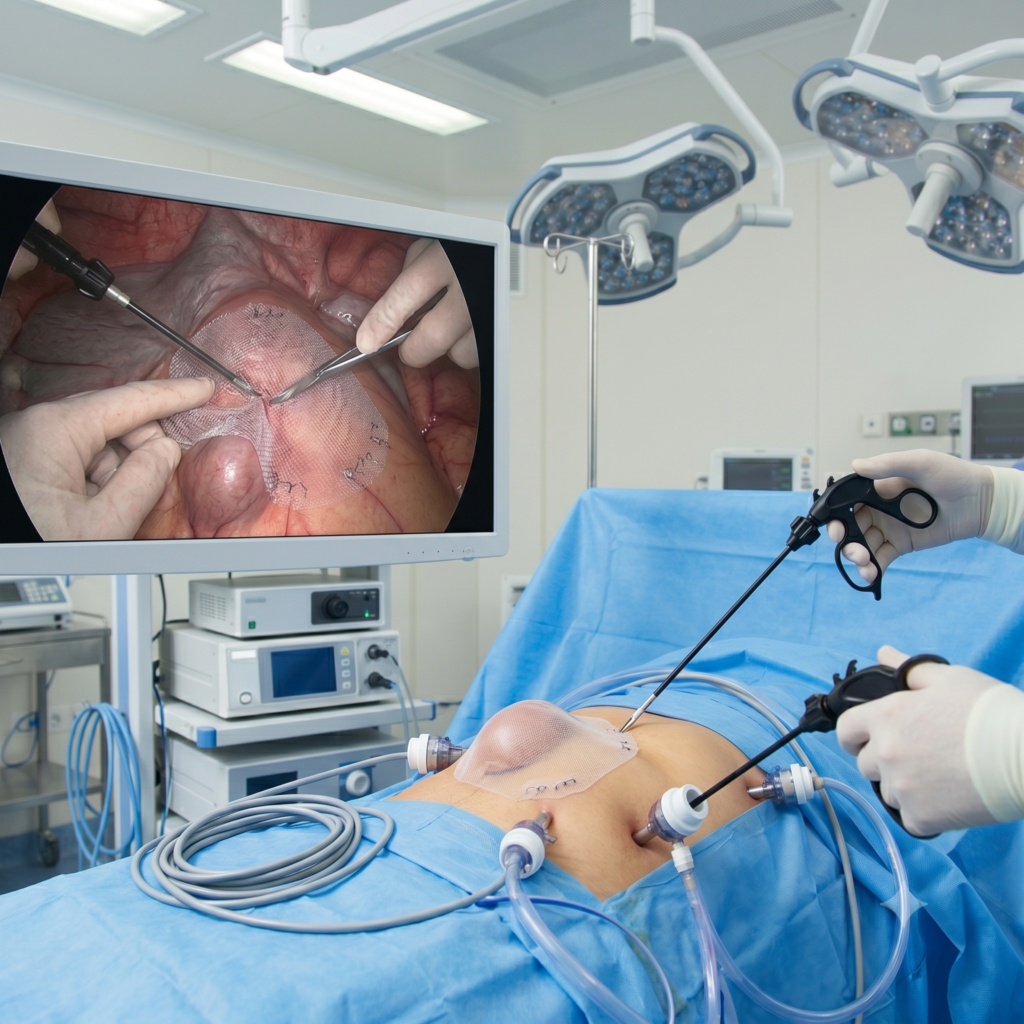
A hernia manifests when an internal organ or intra-abdominal tissue protrudes through a structural defect or tear in the surrounding muscle wall. Laparoscopic repair reconstructs this barrier by securely placing a medical-grade prosthetic mesh across the weakness.
Transabdominal Preperitoneal (TAPP)
The surgeon enters the peritoneal cavity, incises the lining membrane, places the mesh over the defect site, and closes the membrane flap over it to protect the bowel from direct contact with the mesh.
Intraperitoneal Onlay Mesh (IPOM)
Frequently utilized for ventral or incisional hernias, the specialized mesh is applied directly over the inner side of the abdominal wall and securely anchored using surgical tacks or sutures.
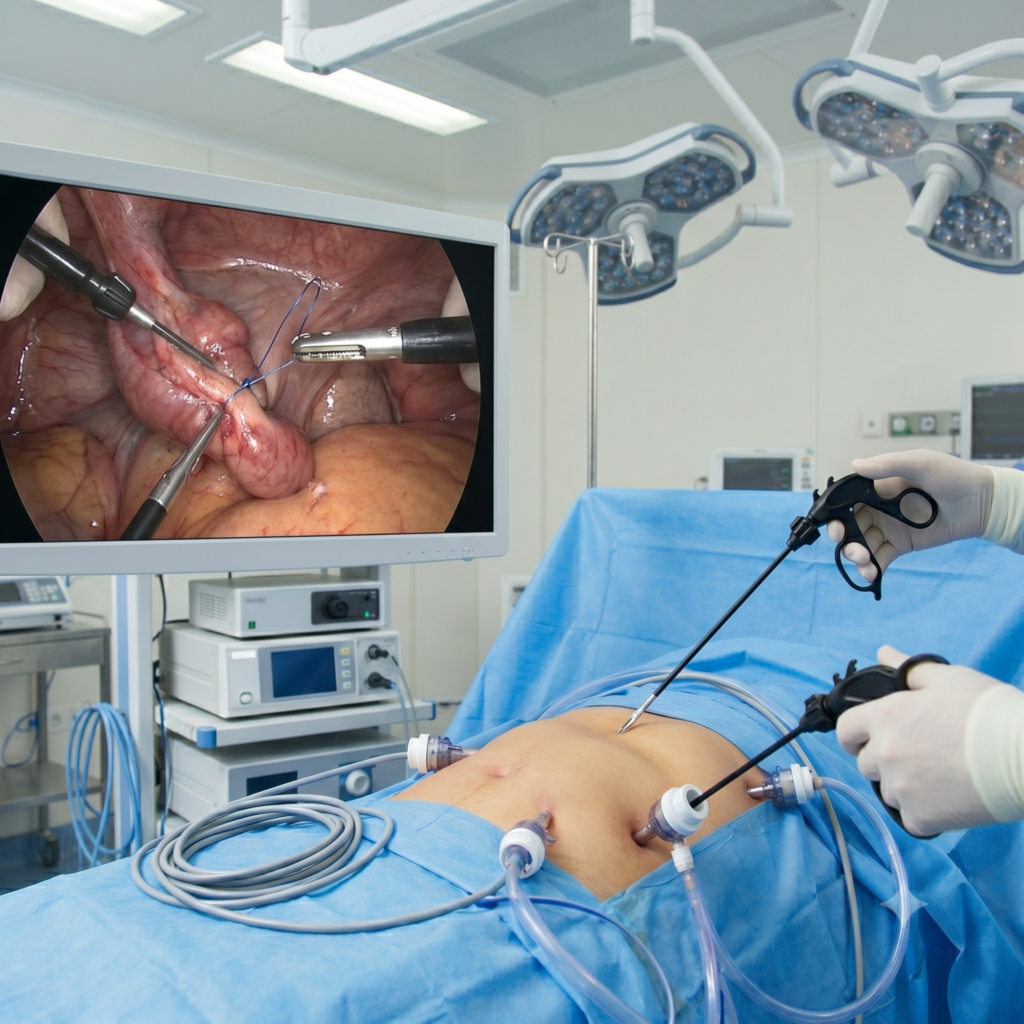
Laparoscopic Gastric Perforation Repair
A medical emergency arising from a structural breach or hole in the stomach wall, frequently induced by progressive peptic ulcer disease, localized trauma, or chronic chemical erosion. This dangerous hole permits highly acidic gastric contents to leak straight into the sterile peritoneal space, inducing acute sepsis. The laparoscopic intervention consists of an aggressive wash (peritoneal lavage) and immediate anatomical suturing, usually reinforced with an omental tissue patch.
Intestinal Obstruction or Perforation Repair
Intestinal Obstruction refers to a critical physical blockage within the small or large intestine caused by post-surgical scar tissues (adhesions), volvulus, or tumor masses, preventing regular movement of contents. Intestinal Perforation indicates a localized tear or hole along the intestinal tracts caused by
infections like Typhoid or severe diverticular disease. Laparoscopy permits clear inspection to dissolve
blocking scar bands, suture perforations, or resect diseased bowel loops safely.
GYNAECOLOGICAL SURGERY PROCEDURES
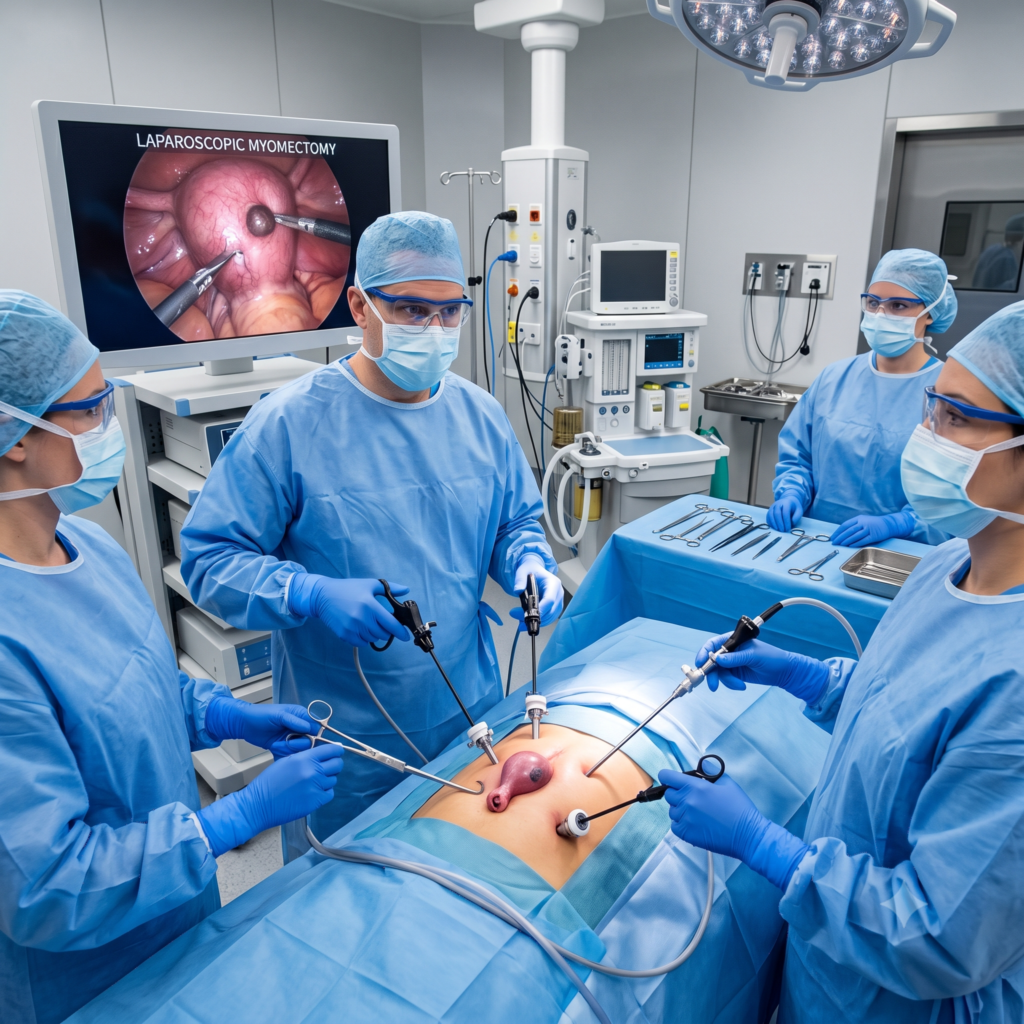
Laparoscopic Myomectomy
The specialized, precision-guided removal of benign, non-cancerous smooth muscle tumors within the uterine wall known as fibroids (myomas). Fibroids can trigger heavy menstrual hemorrhage, recurrent pelvic pressure, and structural infertility. Unlike a total hysterectomy, a myomectomy isolates and removes only the individual fibroids, followed by meticulous suturing of the uterine tissue layers. This delicate approach preserves full reproductive function and future pregnancy capabilities.
Laparoscopic Ectopic Pregnancy / Tubectomy
Ectopic Pregnancy occurs when a fertilized ovum mistakenly implants outside the endometrial cavity, most frequently within a delicate Fallopian Tube. As development progresses, it poses an immediate risk of tubal rupture and fatal internal bleeding; laparoscopy is deployed to carefully extract the pregnancy mass and safeguard maternal health. Tubectomy (Tubal Ligation) is an elective, permanent female contraceptive technique where both Fallopian tubes are safely occluded, clipped, or severed to permanently halt egg-sperm fertilization pathways.
Laparoscopic Hysterectomy
Laparoscopic Hysterectomy
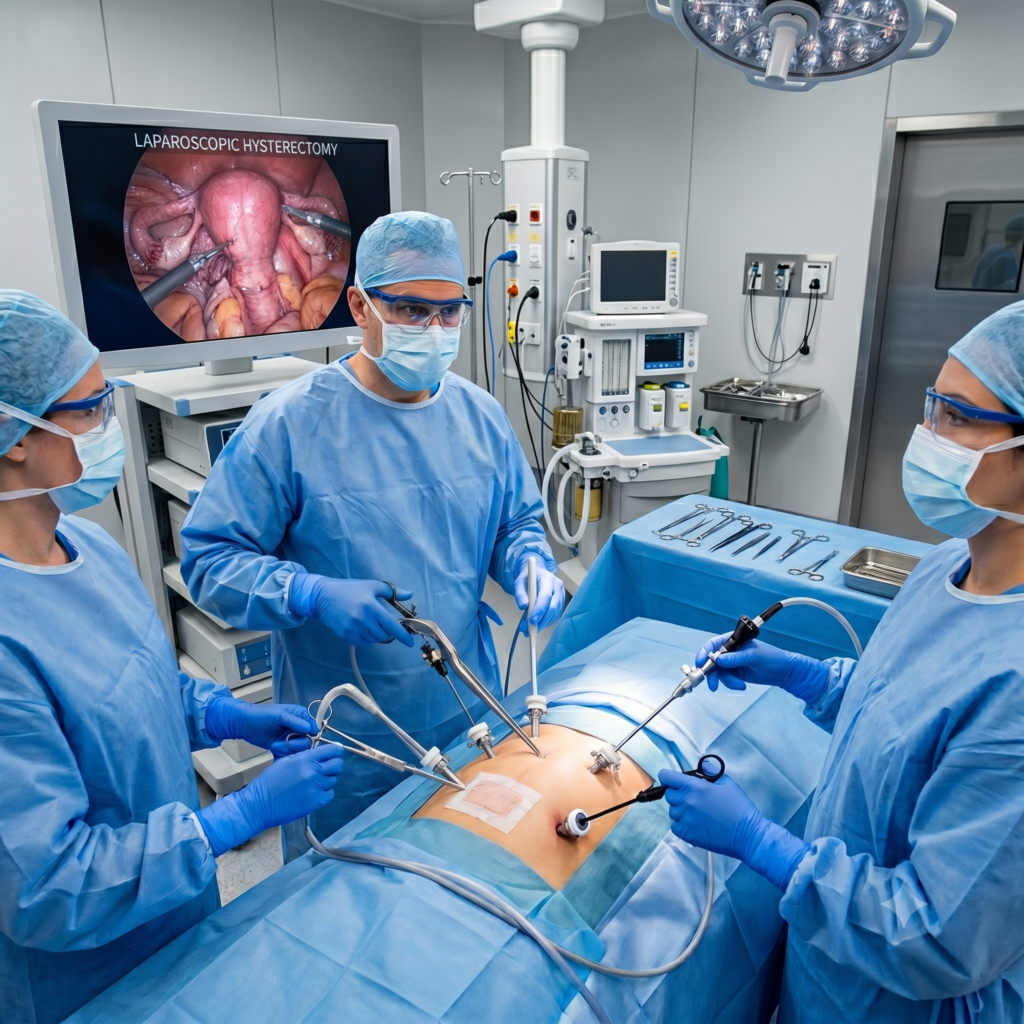
A hysterectomy refers to the complete or partial surgical removal of the uterus, commonly indicated for advanced endometriosis, symptomatic adenomyosis, pelvic organ prolapse, or pelvic malignancies.
Laparoscopic Assisted Vaginal Hysterectomy (LAVH)
The upper vascular pedicles, ligaments, and supporting structures of the uterus are systematically detached via laparoscopic instruments, while the final extraction of the organ is completed safely through the vaginal canal.
Non-Descent Vaginal Hysterectomy (NDVH)
An operative approach where a non-prolapsed uterus is removed entirely through the natural vaginal path. Laparoscopic visualization is frequently integrated to map out hidden pelvic adhesions or examine adjacent
ovaries before initiating the vaginal extraction